NYTG Logo

All the songs in ‘Ragtime’ on Broadway

The award-winning musical blends spiritual, blues, vaudeville, jazz, and of course, ragtime stylings in its sweeping portrait of early 20th-century New York.

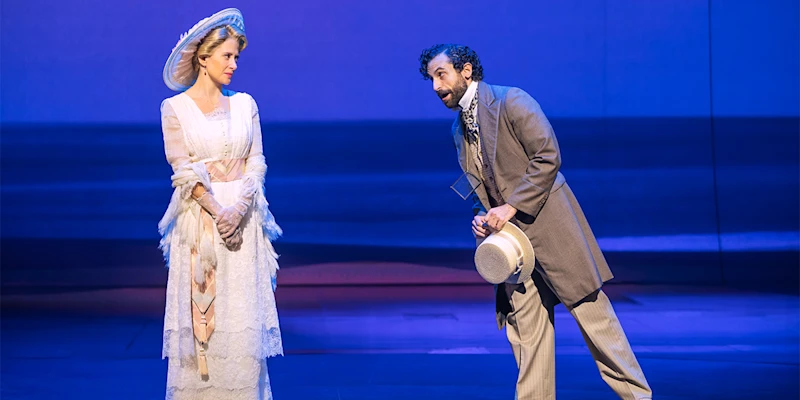
Ragtime is a richly woven musical tapestry. Stephen Flaherty and Lynn Ahrens blend diverse musical styles to tell a sweeping story of three intersecting worlds in early-1900s New York, represented by privileged white Mother and Father, Latvian Jewish immigrant Tateh, and Black musician Coalhouse Walker Jr. and his beloved Sarah.

So, listen up for ragtime (naturally!), as well as spiritual, blues, vaudeville, and jazz stylings in the hit Broadway revival, hailed as “stirring” by New York Theatre Guide, at the Vivian Beaumont Theater in Lincoln Center. Before you go, get to know more about all the Ragtime songs, several of which are reprised for dramatic impact, in our guide below.

Get Ragtime tickets now.

This article contains spoilers for Ragtime.

Summary

  • Ragtime features famous musical theatre songs including "Wheels of a Dream
  • " "Make Them Hear You
  • " and "Back to Before
  • " The score incorporates spiritual; blues; vaudeville; jazz; and ragtime sounds
  • The musical follows three intersecting social and racial groups in early 20th-century America
1.

“Ragtime”

2.

“Goodbye, My Love”

3.

“Journey On”

4.

“The Crime of the Century”

5.

“What Kind of Woman”

6.

“A Shtetle Iz Amereke”

7.

“Success”

8.

“His Name Was Coalhouse Walker”

9.

“Gettin’ Ready Rag”

10.

“Henry Ford”

11.

“Nothing Like the City”

12.

“Your Daddy’s Son”

13.

“The Courtship”

14.

“New Music”

15.

“Wheels of a Dream”

16.

“The Night That Goldman Spoke at Union Square”

17.

“Gliding”

18.

“Justice”

19.

“President”

20.

“Till We Reach That Day”

21.

“Coalhouse’s Soliloquy”

22.

“Coalhouse Demands”

23.

“What a Game”

24.

“Atlantic City”

25.

“Buffalo Nickel Photoplay, Inc.”

26.

“Our Children”

27.

“Sarah Brown Eyes”

28.

“He Wanted to Say”

29.

“Back to Before”

30.

“Look What You’ve Done”

31.

“Make Them Hear You”

32.

“Ragtime” / “Wheels of a Dream”

1.

“Ragtime”

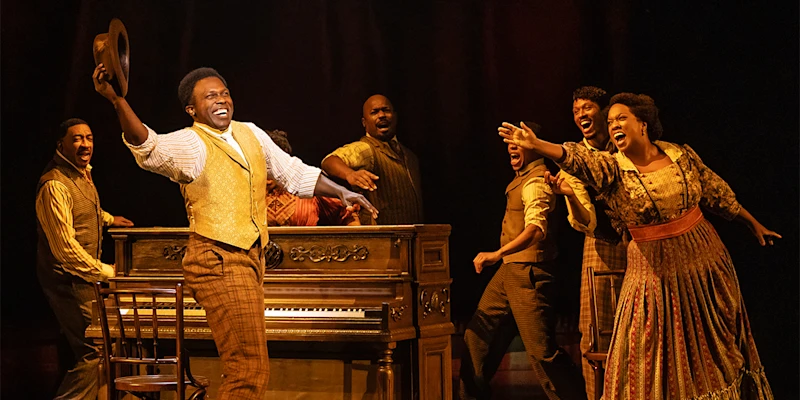
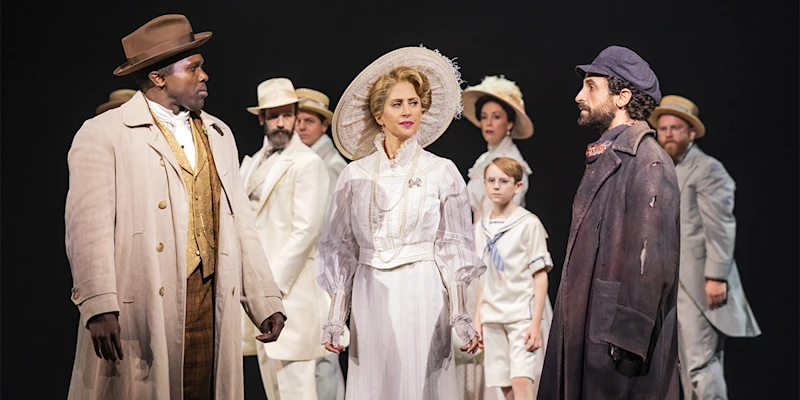
The full-company opener introduces the intersecting worlds of white, Black, and immigrant Americans in early-1900s New York, establishing the show’s themes of change, tension, and shared history. Referring to ragtime as a symbol of the changing sociopolitical landscape, the whole cast belts, “It was the music of something beginning, an era exploding, a century spinning.”
“Ragtime”

2.

“Goodbye, My Love”

As Father, a fireworks manufacturer and amateur explorer, leaves on his latest expedition, Mother subtly expresses restlessness beneath polite affection. It’s a hint of her yearning for independence. “Let this be the year,” she sings, “we both travel.”

3.

“Journey On”

Father, Tateh, and Mother face prospects of change and uncertainty in this rousing trio that takes on a driving, march-like insistence. In one of the show's first moments of worlds colliding, Father's exploratory ship and Tateh's immigrant-packed ship briefly pass each other, each inspiring awe from the other boat.

4.

“The Crime of the Century”

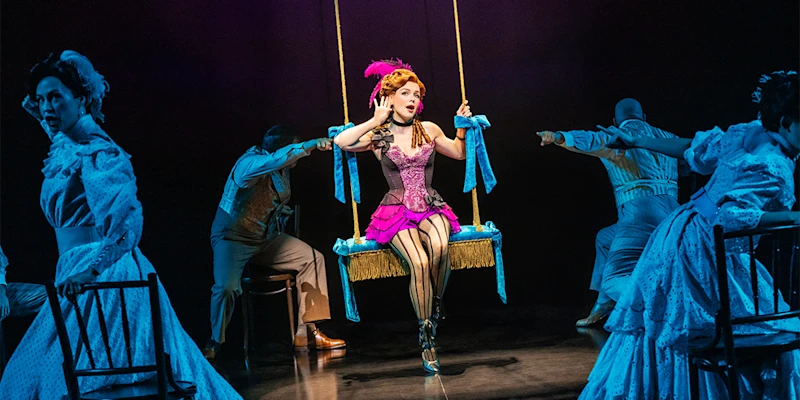
This jaunty, vaudeville-flavored novelty number recalls a real-life sex scandal in which Harry Thaw, the husband of entertainer Evelyn Nesbit, shot her lover, architect Stanford White. The song captures America’s obsession with celebrity, morality, and public spectacle.

“The Crime of the Century”

Unlock your 24-hour New York City itinerary

Unlock your exclusive guide, full of the best attractions, food, free events and more.

09:00

Breakfast at Liberty Bagels

Regularly named one of the city’s best bagel shops, the unassuming Liberty Bagels is the perfect spot to get a classic NYC breakfast sandwich.

10:00

Macy’s Herald Square

One of the world’s largest stores, Macy’s is a sight to behold, especially when it’s decked out for the holidays.

5.

“What Kind of Woman”

A life-and-death crisis quite literally crops up in Mother’s front yard in New Rochelle, prompting her to reflect on her sheltered, rule-ridden life as well as that of Sarah, a Black domestic worker.

6.

“A Shtetle Iz Amereke”

Including Tateh and his daughter, immigrants of many nations marvel at the new world as they pass through Ellis Island in this song steeped in old-world folk music textures.

7.

“Success”

“I may be just a maker of art, but here you can start with less and make a success.” Tateh sings of the American dream, moving from easy optimism to the starker truth that success — and providing for his young daughter — isn’t guaranteed.

8.

“His Name Was Coalhouse Walker”

The song provides our first look into Coalhouse’s story: He's a successful Harlem pianist who falls for Sarah, leaves her, and vows to get her back.

“His Name Was Coalhouse Walker”

9.

“Gettin’ Ready Rag”

Upon learning of Sarah’s whereabouts, Coalhouse prepares to see her in this lively, up-tempo number. He’s eager to impress her with his new car, a symbol of success that’s key to the show’s plot. “Think of what a better man she'll see,” he sings, “when Mr. Henry Ford puts me at the wheel of a Model T!”

10.

“Henry Ford”

The real-life industrialist reshaped manufacturing in the early 20th century by introducing the moving assembly line for cars, drastically increasing production speed while exacting a human toll. “Every worker, a cog in motion," he describes in the song. "Speed up the belt, speed up the belt.”

11.

“Nothing Like the City”

At a New Rochelle railroad station, Mother and her son, Edgar, meet Tateh and his daughter. The adults exchange hellos. As they part, Edgar tells Mother, “We’re going to know them.” Turns out the boy has a gift for prophecy.

12.

“Your Daddy’s Son”

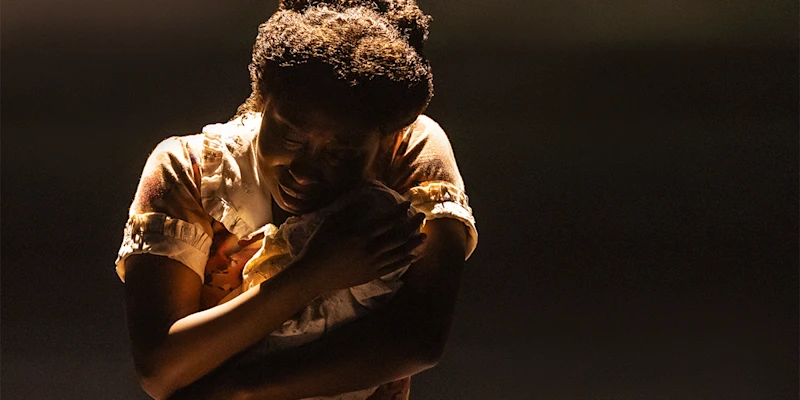
Sarah’s soulful, spiritual-tinged lullaby to her baby reveals that his father, Coalhouse, took off before he knew she was pregnant. She confesses that fear drove her to an unthinkable act and asks for forgiveness.

“Your Daddy’s Son”

13.

“The Courtship”

The musical interlude recalls Coalhouse’s weekly Sunday visits to woo Sarah with his ragtime piano playing, while Mother’s family observes and interacts around them.

14.

“New Music”

The song is about change – and how it can be both challenging and liberating. The song underscores the reunions of two couples: Father and Mother after his long trip and Coalhouse and Sarah after their estrangement.

15.

“Wheels of a Dream”

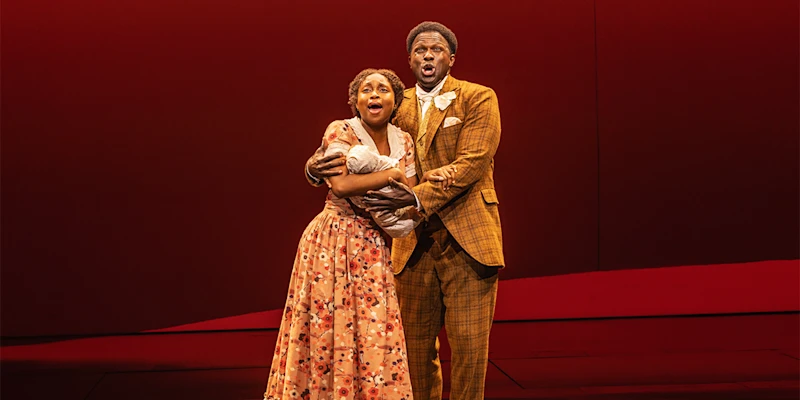
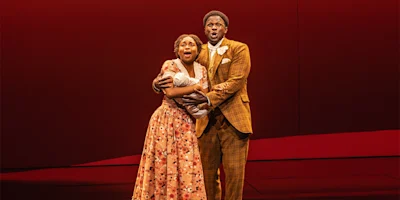
Coalhouse imagines a future gleaming “with the promise of happiness” for his son, expressing love, legacy, and hope in this powerfully plainspoken duet with Sarah.

His car returns as a symbol of success in this song's lyrics: "That car full of hope will always gleam with the promise of happiness and the freedom he'll live to know [...] our son will ride on the wheels of a dream."

“Wheels of a Dream”

16.

“The Night That Goldman Spoke at Union Square”

Mother’s Younger Brother, a "young man searching for something to believe in" as described in the "Prologue," recalls hearing anarchist and activist Emma Goldman speak at a rally. The moment ignites his ideological awakening as he leans into radicalism.

17.

“Gliding”

Tateh soothes his daughter with a waltz-like tune as he flips through his sketchbook. He’s unaware that his silhouetted drawings of ice skaters will become key to the stability he’s been chasing.

18.

“Justice”

After racist firemen destroy his cherished car, Coalhouse becomes consumed with securing justice: “I will not move from where I’m standing till what’s mine is restored to me.”

19.

“President”

Sarah’s efforts to speak out on Coalhouse’s behalf at a campaign rally lead to tragedy when she’s mistaken for a political assassin.

20.

“Till We Reach That Day”

In the wake of Sarah’s death, Coalhouse’s community longs for “a day of peace, a day of pride, a day of justice we have been denied.” In this gospel-inflected choral number that closes out Act 1, singers declare, “We’ll never get to heaven till we reach that day.”

“Till We Reach That Day”

21.

“Coalhouse’s Soliloquy”

“Say goodbye to music, say goodbye to light. Anything I cared for, take it from my sight.” A vengeful Coalhouse grieves Sarah and vows violence — “my law and my justice” — in this bluesy solo that opens Act 2 on a dark note.

22.

“Coalhouse Demands”

Coalhouse resorts to murder and violence to avenge Sarah, and he becomes the talk of the town as a revolutionary figure. He won’t back down from exacting revenge on the bigoted fire chief behind his downfall.

23.

“What a Game”

Father takes Edgar to a ballgame for a break from the turbulence around them, but his plan strikes out. The comic number packed with bouncy rhythms sends up baseball — the so-called American pastime — by emphasizing how the game escalates into aggression and violence. Just like society at large.

24.

“Atlantic City”

This two-part song sees Father relocate the family to Atlantic City to protect Coalhouse and Sarah’s child. The tension between Father and Mother bubbles to the surface in the seaside town, where Evelyn Nesbit and Harry Houdini have also landed.

25.

“Buffalo Nickel Photoplay, Inc.”

Tateh, now professionally known as the Baron Ashkenazy, has struck it rich as a filmmaker and founder of a production company. While making a movie in Atlantic City, he relates his success story to Father and Mother in this chipper number.

“Buffalo Nickel Photoplay, Inc.”

26.

“Our Children”

In this sweetly hopeful duet foreshadowing the growing bond between Mother and Tateh, they watch their kids frolic on the sand. “See them running down the beach. Children run so fast,” they sing together. “Toward the future, from the past.”

27.

“Sarah Brown Eyes”

In this intimate, rhythmic duet, Coalhouse and Sarah (in the form of a ghost or vision) recall their first meeting. What was once tender and joyful for Coalhouse has transformed into grief and a burning desire for vengeance.

28.

“He Wanted to Say”

Emma Goldman and Younger Brother recall how the latter became involved with Coalhouse’s gang and how his experience working at Father’s fireworks factory proved valuable to the militant group.

“He Wanted to Say”

29.

“Back to Before”

Mother’s soaring solo turns a woman’s metamorphosis into a thrilling Broadway aria in which she takes stock of how her life with Father will never be the same. “There was a time when you were the person in motion. I was your wife. It never occurred to want more,” she sings. But times change. People too.

30.

“Look What You’ve Done”

As Coalhouse’s reign of terror reaches a fever pitch, educator and activist Booker T. Washington implores him to consider the impact his “selfish recklessness” will have on the Black race and, more specifically, his son.

31.

“Make Them Hear You”

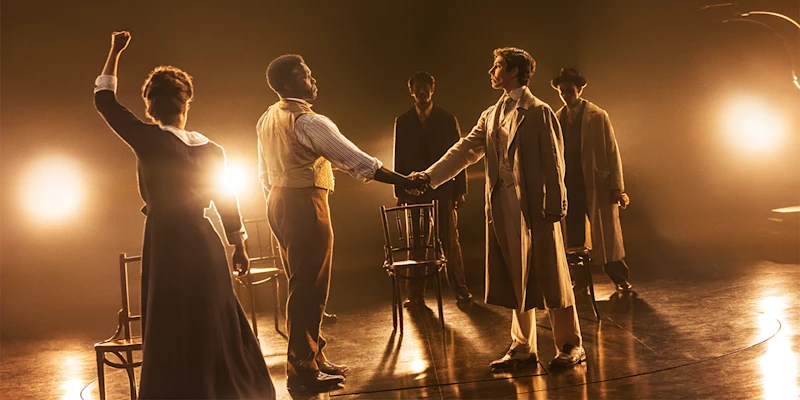
Before he surrenders to the police, Coalhouse calls for justice and remembrance, urging oppressed voices to be heard. The booming anthem serves as the show’s ideological centerpiece and emotional climax.

32.

“Ragtime” / “Wheels of a Dream”

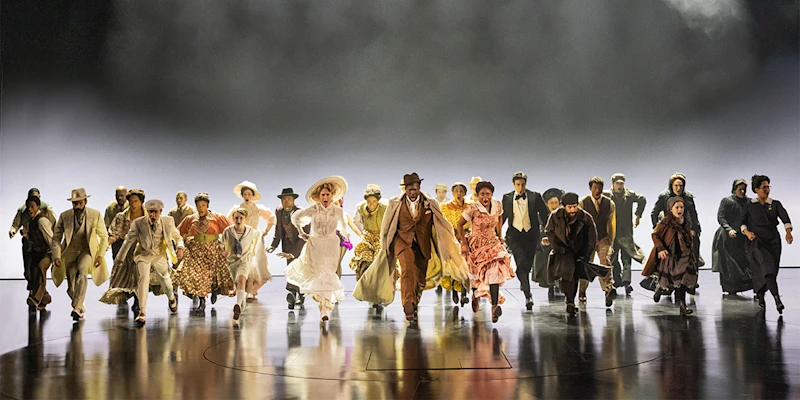
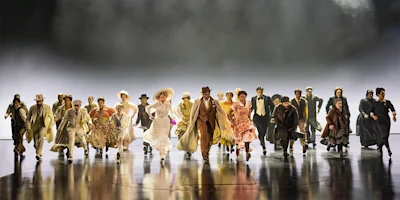
Mother may not go back to before, but America does. In the show's finale, which reprises two major anthems, the company reunites to reflect on loss, progress, and legacy. Like musical rhythms, history’s struggles have a way of repeating themselves.

Get Ragtime tickets now.

Photo credit: Ragtime on Broadway. (Photos by Matthew Murphy)

Get tickets

Frequently asked questions

Where is Ragtime playing?

Ragtime is playing at Vivian Beaumont Theater - Lincoln Center Theater. The theatre is located at 150 West 65th Street, New York, 10023.

How long is Ragtime?

The running time of Ragtime is 2hr 45min. Incl. 15min intermission.

How do you book tickets for Ragtime?

Book tickets for Ragtime on New York Theatre Guide.

What's the age requirement for Ragtime?

The recommended age for Ragtime is Ages 10+. Children under the age of 5 are not permitted..

What is Ragtime about?

Ragtime is a sprawling story of New York at the dawn of the twentieth century as three families from different backgrounds collide in search of the American Dream.

What are the songs in Ragtime?

The songs feature music inspired by the ragtime genre itself along with soaring solos, duets, and big ensemble numbers including "New Music," "Til We Reach That Day," "Journey On," "Back to Before," and "Wheels of a Dream."

Who wrote Ragtime?

Ragtime is written by a trio of venerable Broadway legends: a lush score by Stephen Flaherty and Lynn Ahrens and a stirring book by Terrence McNally.

Who directs Ragtime?

Tony Award nominee Lear deBessonet directs, marking her inaugural production as Lincoln Center Theater's new Artistic Director.

Is Ragtime appropriate for children?

Ragtime features children in the show, though it does cover themes of death and racism. Children must be four and over to enter Broadway shows.

Is Ragtime good?

Ragtime is a musical theatre classic, winner of multiple Tony Awards, and epic look at American life. It features a grand score and is sure to thrill audiences with its starry cast.