

The Cold War is a hot topic in NYC theatre this season
A revised version of the musical Chess and the new plays Mother Russia and Cold War Choir Practice, all on stage right now, mine this era for dramatic tension.
Summary
- The musical Chess and the plays Mother Russia and Cold War Choir Practice all tackle the Cold War era and are all running on or off Broadway in spring 2026
- Writers Danny Strong; Lauren Yee; and Ro Reddick share the inspirations behind their work and what makes the Cold War ripe for onstage drama

Danny Strong remembers huddling under his desk at school as a child in the early 1980s as he and his classmates performed Cold War-era duck-and-cover drills to prepare for a potential nuclear bomb strike. “I remember this constant fear of nuclear war and just how palpable that was,” the writer said. “It gave me nightmares for years.” Decades later, he’d pen a new book for one of the most notorious Cold War musicals, 1986's Chess, now back on Broadway using Strong’s script. As it happens, fellow playwrights Lauren Yee and Ro Reddick, whose childhoods also overlapped with the end of the Cold War era, would also dramatize the conflict and its aftermath off Broadway this same season, in Mother Russia at Signature Theatre (through March 22) and Cold War Choir Practice at MCC Theater (through March 29).
Each playwright’s reasoning for tackling one of the U.S.’s longest and most complex conflicts was unique, but they shared the sentiment that it was simply too rife with dramatic tension to resist. “There's something about the era where the stakes are so high,” said Strong. “There was this constant fear that the world could be destroyed at any moment. But it was also a time of clever cunning between spies. It wasn't a period of big battles and mass death. Instead, you had the KGB and the CIA and subterfuge, which makes it feel rich and ripe for theatricality and drama.”
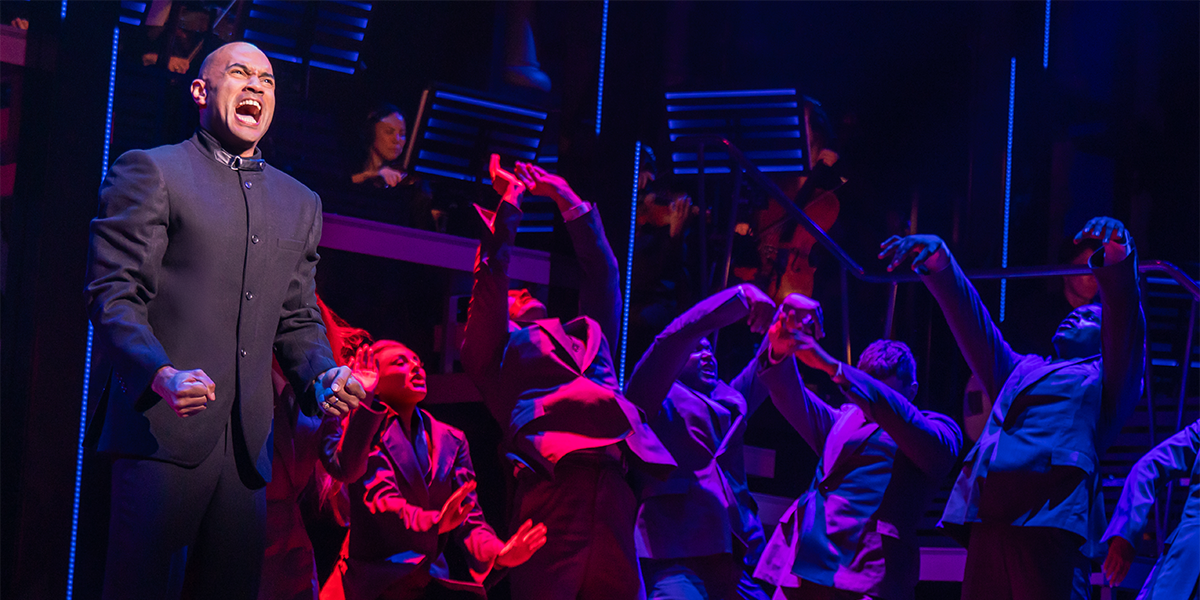
But the big red button was never pushed, and the Cold War remained cold, though we know that only in hindsight. As Strong was writing the book for Chess’s first Broadway revival — in which a Cold War chess match between the Soviet Union and the United States mirrors the countries' geopolitical tensions — he relished the modern perspective because the original production didn’t have the luxury of retrospect.
“They had originally written and done this show in the middle of the height of the Cold War in the 1980s, and so my thought was, 'Let's turn this into a Cold War history play,'” said Strong. “Let's tell the story of the Cold War in a way they couldn't because they were living it.” So Strong latched onto real events around which to set the chess match, like the negotiation of the SALT II Treaty that sought to limit the production of nuclear weapons, and a war exercise that almost caused the launch of a real nuclear weapon.
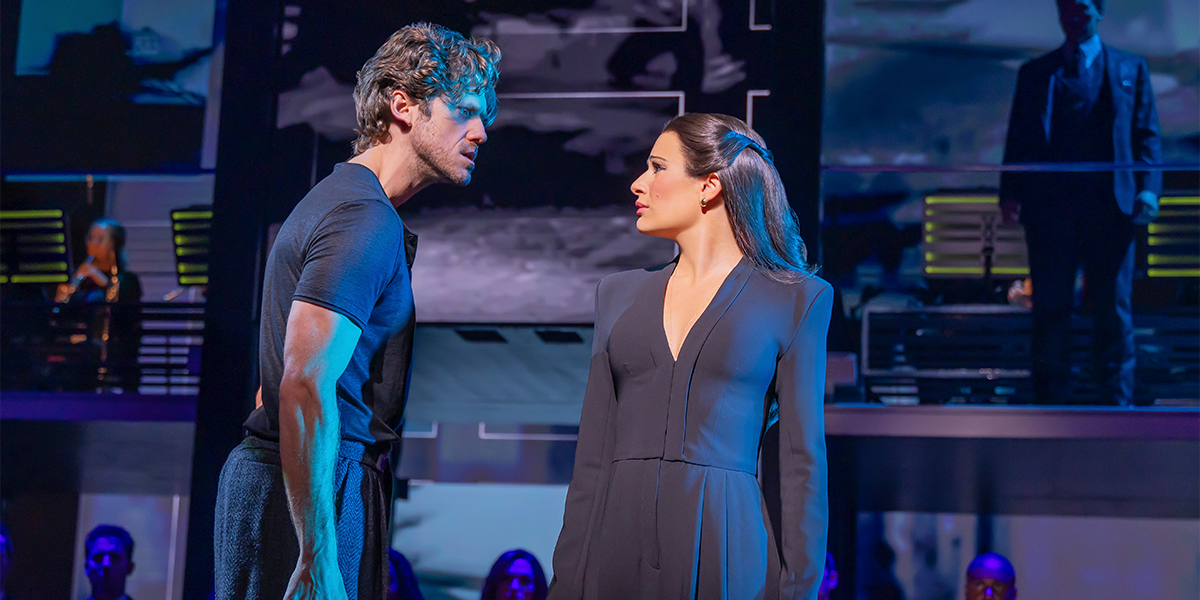
Reddick also centered her exploration around notable historical checkpoints, namely the 1987 signing of the INF Treaty, which required the U.S. and Soviet Union to eliminate all ground-launched ballistic and cruise missiles. “I wanted [Cold War Choir Practice] to be set before the U.S. had really figured out if they could trust Gorbachev,” she says. “There was still a little bit of distrust, even if we weren't in the tensest part of the Cold War.” That distrust became the linchpin of Reddick’s play, which is largely told from the perspective of her 10-year-old protagonist — a stand-in for children like Reddick whose perception of the Cold War was one of uncertainty and naiveté. “I found it really generative to think about the family dynamics that show up in the play and what this young person is asked to consider and navigate at the age of 10,” she said.
Reddick's source of inspiration was contemporary, however. “Putin invaded Ukraine [in 2022], and I was thinking a lot about the renewed nuclear threat — if it ever left,” she explained. “Everyone was talking about a new Cold War.” So she drew parallels between what she was grappling with in her adulthood and those childhood fears. “I'm just trying to make sense of things. I want us all to try to make sense of this together, and this is just my lens.”

Where Strong’s Chess stays firmly grounded in espionage, the tone of Reddick’s piece takes surrealist twists and turns; a Soviet-hacked Speak & Spell toy sent from a pen pal contributes to Cold War Choir Practice’s tension. Yee’s Mother Russia tends toward a similar silliness to process the era, though she’s set her script a few years post-conflict, as two men from different Soviet social strata seek out their places in the new normal. At one point, they share a rare McDonald’s Filet-o-Fish with such glee and desperation that they end up licking each other’s fingers.
“I was drawn to a world where it felt like things were opening — where all of a sudden there was opportunity where there hadn't been before, and how slippery that was,” Yee said. It’s a theme she returns to often; she’s previously explored different iterations of communism in Cambodian Rock Band and The Great Leap.
“There's this fascination with regime changes,” said Yee. “We’re caught in things politically where you're just like, this feels like our waking nightmare and we're going to be in this situation forever, which is probably how people felt during the Cold War. And then to suddenly have that flip, for better or worse, that feels very relevant.”
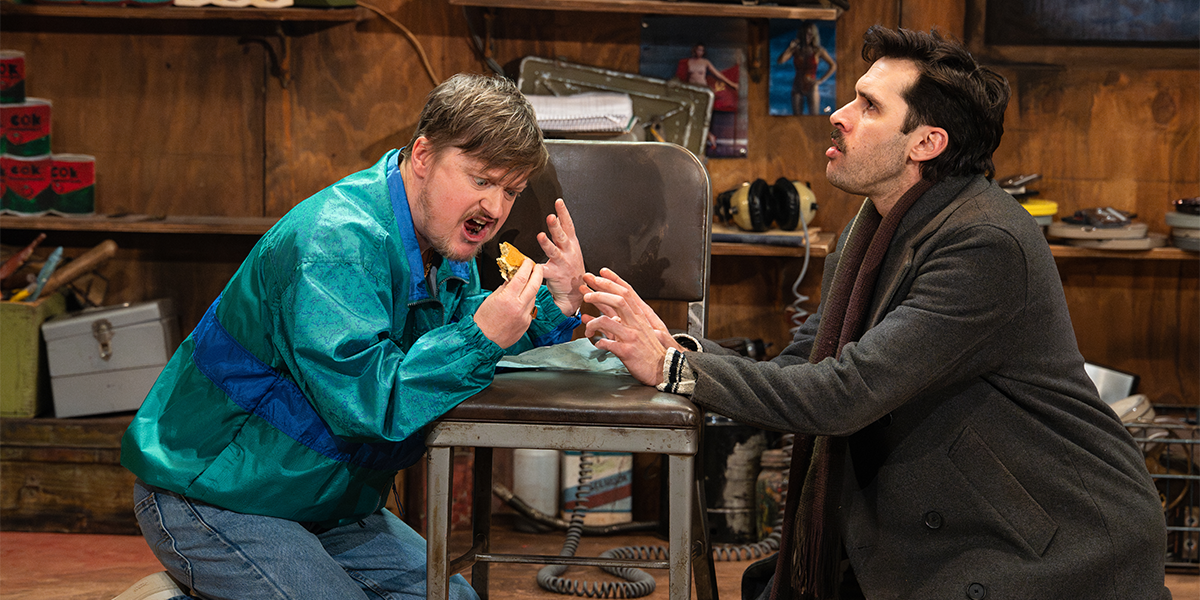
And while there are clear contemporary associations, Yee began writing the show in 2017, initially drawing her story’s parallels to the Obama era. “All of a sudden there's all this openness and there's a new way of doing things, and you're telling me all our problems are gone and we should rejoice. But there's still plenty that is going wrong in this new system. All your problems are not gone,” she said.
The fact that all three plays share a season is too prescient to be coincidence, even though all three have had such different development processes. “There's a certain romantic quality and a nostalgia for the Cold War,” said Strong. And while Yee agrees, she also thinks they have a forward-looking benefit as well. “Stories around communism, to me, feel a little bit like a warning of what can happen when suspicion and mistrust and particular ways of viewing each other narrow our generosity,” she said.
Because, as the cliche goes, history repeats itself, and that’s never more obvious than in watching a history play. Yee personifies this notion with her play’s title character, an omniscient, sardonic embodiment of the truths of history brought to bear. Mother Russia gripes and groans about the fools she sees striving for better — she knows they’ll fail as so many have before them, yet they continue to try. It’s true of all the characters in Chess, Cold War Choir Practice, and Mother Russia. Hope and despair live side by side, but the jokes hit a little differently when they’re a bit too close to home. They couldn’t possibly drop the bomb on us this time, right?
Photo credit: Chess, Cold War Choir Practice, and Mother Russia. (Chess photos by Matthew Murphy; Mother Russia photos by HanJie Chow)
Originally published on


Latest News
- 1
Tony Award winner Jonathan Groff will return to Broadway in 'The Amish Project'
- 2
Tom Hanks and Kelli O'Hara to star in 'This World of Tomorrow' on Broadway
- 3
Meet the cast of 'Now You See Me' on Broadway
- 4
Where to see 'A Christmas Carol' in New York
- 5
The 10 best U.S. cities to see shows in before they head to Broadway
- 6
Broadway shows to see based on your favorite book
- 7
Lin-Manuel Miranda's 'Warriors' sets initial Broadway cast
- 8
Abigail Barlow to return to ‘Six’ on Broadway
- 9
Margaret Cho to succeed Rachel Dratch in 'The Rocky Horror Show' on Broadway
- 10
What to do in New York for the holidays in 2026
Subscribe to our newsletter to unlock exclusive New York theatre updates!
- Get early access to Broadway's newest shows
- Access to exclusive deals and promotions
- Stay in the know about top shows and news on Broadway
- Get updates on shows that are important to you
You can unsubscribe at any time. Privacy Policy