

The ‘Antigone’ awakening: How an ancient Greek tragedy is defining Off-Broadway this spring
The shows The Other Place and Antigone (This Play I Read in High School) are reimagining Sophocles's play to explore civil disobedience, family trauma, and justice for today.
Summary
- Two Off-Broadway plays are reimagining the classic Greek tragedy Antigone in spring 2026
- The original Antigone play follows a woman who defies the law to bury her exiled brother
- The cast and creative teams of the plays The Other Place and Antigone (This Play I Read in High School) discuss the lasting resonance of the Antigone story

NYC is currently having a Greek-tragedy revival that suggests our contemporary world is looking for answers in the ancient past. Following a high-profile production of Sophocles's Oedipus on Broadway, the city’s Off-Broadway theatres are turning their attention to that ill-fated king’s daughter, Antigone. In the Sophocles play named for her, she willingly breaks the law by burying her exiled brother and sparks a fatal standoff between her conscience and the unyielding power of the state.
At The Shed, writer/director Alexander Zeldin stages the visceral, domestic Antigone reimagining The Other Place from January 31 to March 1, while The Public Theater is putting on Anna Ziegler’s Antigone (This Play I Read in High School), a self-aware take that connects the classroom and the state of current reproductive rights, from February 26 to March 22.
Though their approaches vary — one is a gritty family drama, the other an exploration of shifting timelines — both productions invite the same question: Why does Antigone remain a definitive story for our cultural moment? The answer, it seems, lies in the play’s unique ability to transform ancient expressions of grief into today’s call for clarity and compassion.
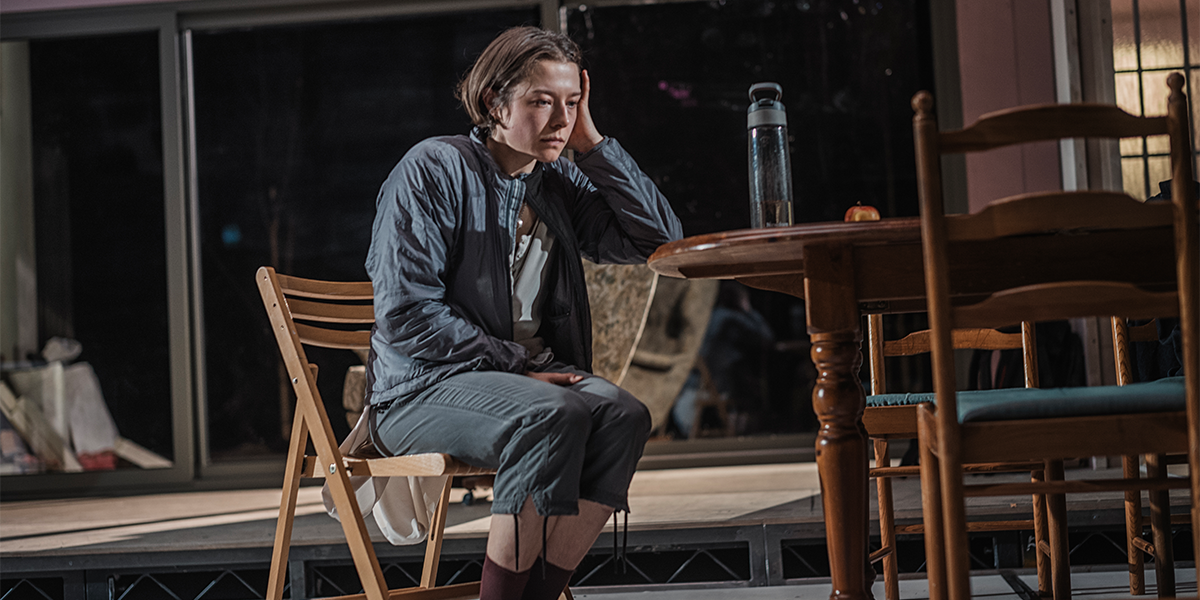
Antigone advocates for the power of unheard voices.
For Zeldin, the pull of Sophocles began with a workshop at the National Theatre in London, but it quickly became personal. The Other Place stays away from a “beat-by-beat recreation” in favor of capturing the “feeling” of the original Antigone, he told New York Theatre Guide. In crafting his play, which centers on Antigone reuniting with her sister on the anniversary of their father's death, Zeldin viewed Sophocles not as a relic of a dead civilization, but as a poet who forced audiences to confront the uncomfortable realities of human existence with a sense of profound purpose.
“Sophocles, in all his work, is very interested in what suffering is, what the nature of suffering is, and what suffering people can teach us,” Zeldin said. “He’s urging us to pay attention to those who lament, who are excluded, who are damned, for they have a kind of power that can change the natural order, upend reality.”
In Zeldin’s hands, the story’s political “state” is shifted onto the family unit, he said. Additionally, The Other Place focuses on Antigone's devotion to her father instead of her brother. His focus on the internal workings of the home serves as a mirror for the broader political issues currently facing America.
“The first step towards accepting dictatorship, which is what you’re at risk of in the United States, comes from accepting the mechanisms, the violence, the repression within our own family,” Zeldin said.
Antigone reimagines justice and leadership.
At the Public, Ziegler’s Antigone (This Play I Read in High School) approaches the myth through a contemporary lens, where a young woman seeks to understand why the ancient voice of Antigone still resonates.
Ziegler maintains the core conflict of Antigone standing against her uncle Creon (played by Tony Shalhoub) and, with startling directness, updates the stakes for a 2026 audience. While the original Antigone defied Creon, a king, to bury her brother, Ziegler’s Antigone breaks the law by getting an abortion.
The production, according to director Tyne Rafaeli, embraces “intentional and unapologetic anachronisms” to create a “theatrical tapestry” that exists in both the past and present. Rafaeli described the play as existing in a “multiverse” that feels “extremely theatrical and extremely poetic.”
“Antigone is singular in its conversation around what one citizen can do in the face of unjust laws,” Rafaeli observed. “That sense of people wanting to make a difference in the world they see around them in the face of increasing injustice and oppression is something that resonates acutely for our current moment.”
Central to the tragedy is Creon, who's tasked with enforcing the law at the cost of his family. In Ziegler’s script, Creon is described as an unremarkable novice who is ill-equipped to lead. Shalhoub saw his character’s conflict as one of impossible human balance rather than simple villainy.
“The struggle for him is so great because he’s caught between being this father figure to her, and caretaker, caregiver, and also the king,” Shalhoub said. “So he’s looking at the bigger picture. It puts both of them in a very intimate and intricate relationship with each other and with their respective agendas.”
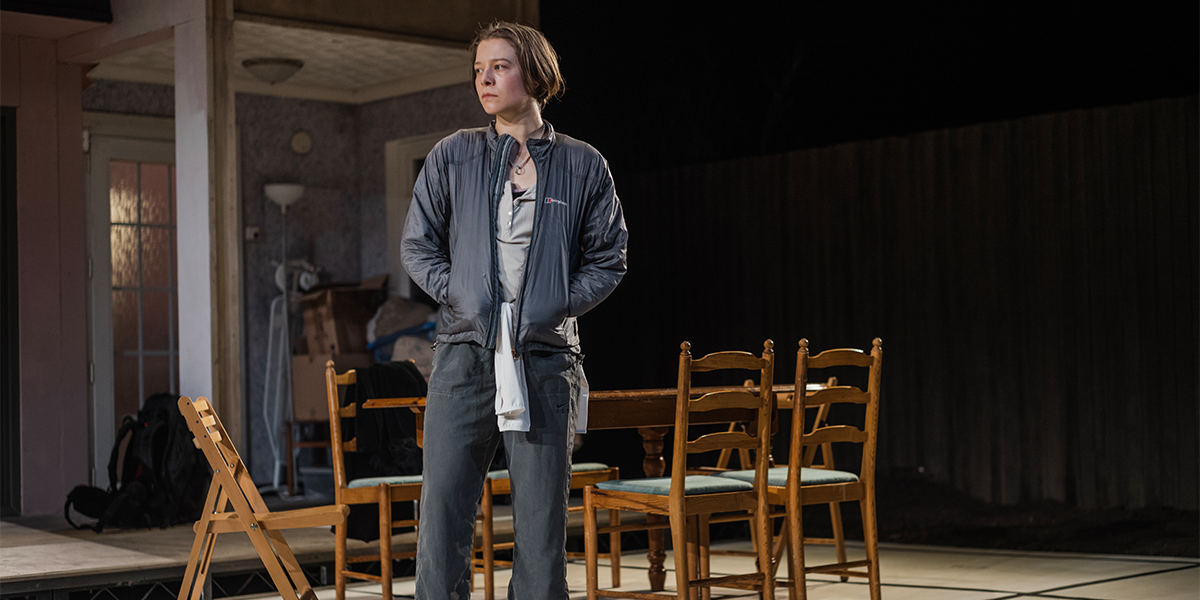
Antigone champions theatre as a democratic act.
The renaissance of ancient texts like Antigone suggests that in a modern landscape dominated by digital noise, audiences crave the “elemental condition of the human problem,” said Shalhoub. He compared Ziegler and Rafaeli’s theatrical experience to a spiritual one, noting that “it’s a sit up, lean in, check, stay in, work a little bit” show that “requires a certain amount of reverence and focus.”
Ultimately, both plays view the return to the Greeks as an essential, collective ritual. Whether it is the gritty realism of a kitchen in Zeldin’s show or the self-aware, time-hopping world of Ziegler’s, the goal is to engage the audience in an investigation of, in Zeldin’s words, “that which we don’t want to see,” turning a shared space into a forum for understanding.
“It’s not surprising to me that there’s a resurgence of the Greeks, when theatre for the Greeks was a democratic act,” Rafaeli said. “Tragedy is a conflict between right and right. It’s not a conflict between right and wrong. The tragedy ensues because both people are right and cannot find a way through. In our moment of such an intense, binary, tribal political landscape, the invitation for an audience to sit in the gray and find compassion for each of these people who feel so right in what they’re doing is extremely cathartic and extremely needed.”
Ziegler echoed this sentiment, hoping audiences will take away “the discomfort of feeling like there are different truths that simply can coexist, and that is also a tragedy.”
As these two visions for Antigone take the stage, they remind us the patterns of the past are never truly over. Instead, they are an invitation to listen more closely to the voices that have been treading these paths for thousands of years, seeking a “river of justice” (per Ziegler’s script) that remains as necessary now as it was in ancient Athens, or in the 12th grade.
Get The Other Place tickets now.
Get Antigone (This Play I Read in High School) tickets now.
Photo credit: The Other Place in London. (Photos by Sarah Lee)
Originally published on


Latest News
- 1
Tony Award Winner Jonathan Groff will return to Broadway in 'The Amish Project'
- 2
Tom Hanks and Kelli O'Hara to Star in 'This World of Tomorrow' on Broadway
- 3
Meet the cast of 'Now You See Me' on Broadway
- 4
Where to see 'A Christmas Carol' in New York
- 5
The 10 best U.S. cities to see shows in before they head to Broadway
- 6
Broadway shows to see based on your favorite book
- 7
Lin-Manuel Miranda's 'Warriors' sets initial Broadway cast
- 8
Abigail Barlow to return to ‘Six’ on Broadway
- 9
Margaret Cho to succeed Rachel Dratch in 'The Rocky Horror Show' on Broadway
- 10
What to do in New York for the holidays in 2026
Subscribe to our newsletter to unlock exclusive New York theatre updates!
- Get early access to Broadway's newest shows
- Access to exclusive deals and promotions
- Stay in the know about top shows and news on Broadway
- Get updates on shows that are important to you
You can unsubscribe at any time. Privacy Policy