


'Joe Turner's Come and Gone' producer Brian Anthony Moreland pulls back the curtain on making a starry Broadway show
The revival led by Taraji P. Henson and Cedric "The Entertainer" is the latest play mounted by Moreland, the sole Black lead producer on Broadway this season.
Summary
- Producer Brian Anthony Moreland is Broadway's only Black lead producer in spring 2026 with a revival of August Wilson's Joe Turner's Come and Gone
- Taraji P. Henson and Cedric "The Entertainer" star in the play as Pittsburgh boarding house owners in the 1910s
- Moreland discusses how his work as a producer shapes audiences' experiences of a show; getting celebrities on board for his plays; working with famous producing partners like reality TV star Kandi Burruss; and organizing community initiatives for his shows
When you see your favorite celebrity in a Broadway show, you may be so excited, you might not think to ask questions about how they wound up there. Questions like, who first thought about casting them? Who helped them through rough days in rehearsal? Who’s making sure the set doesn't fall on them right now?
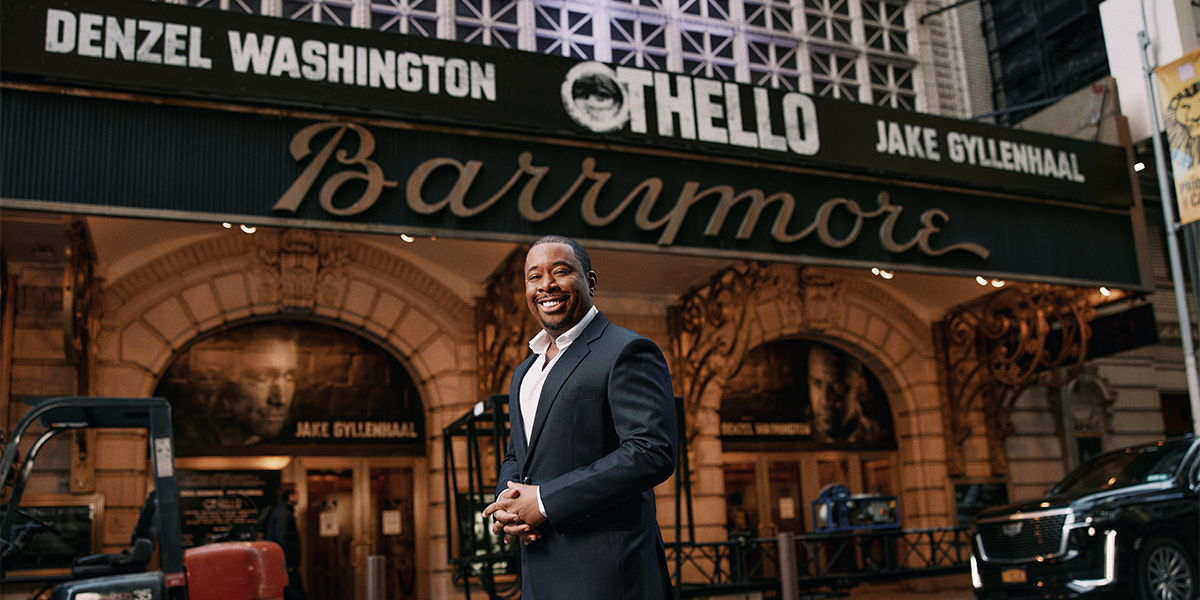
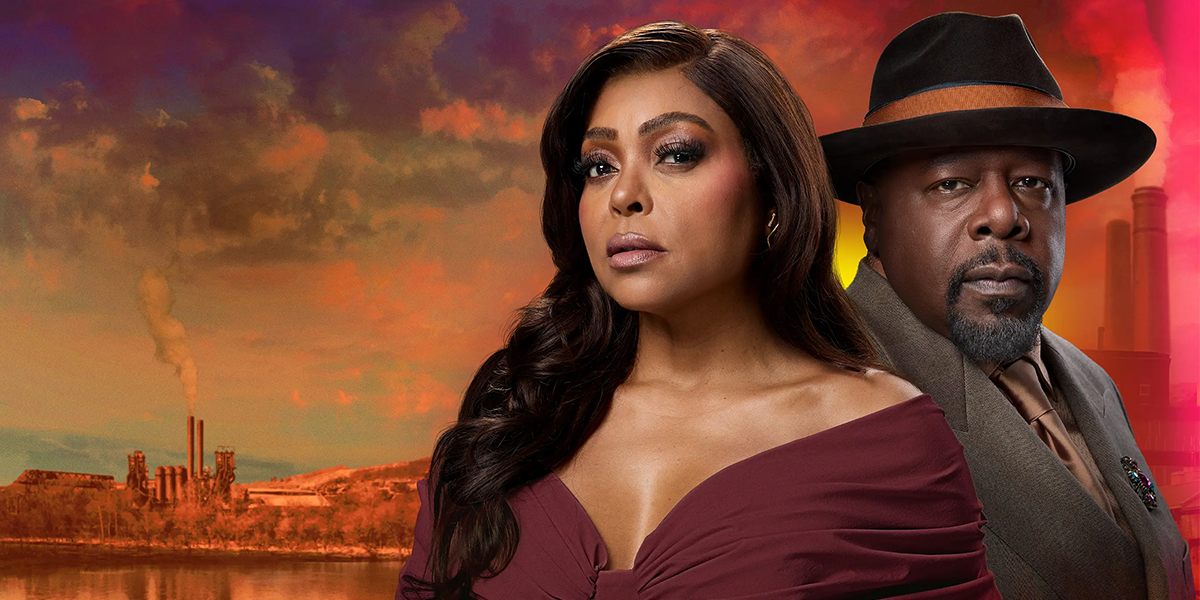
Producers like Brian Anthony Moreland are asking those questions instead. Within the past five years, Moreland's mounted starry box office smashes like 2025's Othello (with Denzel Washington and Jake Gyllenhaal) and 2022's The Piano Lesson (with Samuel L. Jackson). This season, a revival of August Wilson's Joe Turner's Come and Gone makes him Broadway's only Black lead producer. Taraji P. Henson and Cedric "The Entertainer" star as married couple Bertha and Seth Holly, whose boarding house brings together formerly enslaved Black travelers in 1910s Pittsburgh.
Simply put, a Broadway producer is like "the founder and CEO of a brand-new startup," Moreland said: They decide to bring a show to the stage, hire the artists, secure a venue, and raise and maintain the show's finances. But Moreland also tunes into the audience experience, from planning community initiatives (like dinner-and-show packages and talkbacks) to attending his shows with their directors to listen to audience chatter.
"That show you've seen, they have been in rehearsal for four to five weeks, and it's kind of a silo," Moreland said. "We all think we're doing the right thing to communicate a particular emotion, and that emotion might not be communicated in front of the audience. [...] They tell you, and we really do incorporate that information."
In a wide-ranging conversation, Moreland pulled back the curtain on producing a buzzy Broadway show like Joe Turner's Come and Gone, including getting Henson and Cedric on board, connecting with audiences, and finding a secret weapon in producing partner Kandi Burruss.
Beyond basic logistics, what is the job of a producer to you?
The job is to create a safe environment. And by safe, I mean an environment free from the outside world so actors can come into a space and explore.
And then you have the psychological or emotional part of it. I am also the caretaker. I am also the therapist. I am also the problem solver. [...] The producers really are the glue that holds an entire production together.
Other creatives' work, like the set design or choreography, is clearly visible to theatregoers. How does your work shape the audience experience?
First of all, I love that you talk about all the people we don't see. [...] The hair designer, the costume department, the lighting designer, the sound designer, the head carpenters, the painters, the builders, our sign shop that puts up the marquee [...] all those people start before rehearsal even begins, sometimes before casting even begins. By the time the onstage talent gets hired, these people have already been in motion for over six months to a year in advance. When the general public gets a ticket, about 30 different hands have touched it in order to create that ticket.
My job is to make sure all of that is seamless so that when you sit down to enjoy a show, you are simply seeing the onstage talent that looks like they're doing this all on their own.
What makes a celebrity right for a show, besides their star power? How do you decide who to work with?
It's always the show, first and foremost: Does this particular talent fit this show? You start with a list of wild ideas and you think, "Okay, I want... Meryl Streep." You start to go, "Is Meryl Streep looking for a project? Is Meryl Streep interested in the stage? Has Meryl Streep been on the stage? Is she interested in this particular story? Does she have the time?" By the time a a star commits to a play, or at least most of mine, it's six months of their life. They can do two, sometimes three movies in that time period.
No matter how many stars you cycle through [...] the star you land on is the right star for the show because that's the person who not only has the time, but they have the passion.
What made Taraji and Cedric right for the Hollys in Joe Turner?
Like most dramas, there is always some comic relief [...] and this married couple is actually really, really funny. They have banter. They have wit. I saw Taraji P. Henson and Cedric "The Entertainer" in this movie called Larry Crowne [...] and they were the funniest couple, married, having a blast.
We were on the phone with [director] Debbie [Allen] and an agent, and this agent said, "You know, Taraji really wants to come to Broadway in an August Wilson piece, and this happens to be her first-loved piece, Joe Turner's Come and Gone."
This never happens where it's just, they really want to do this. Usually, you're doing a lot more courting in the process. They asked who would play opposite [her], and we said we'd like to get Cedric, and it was done.
Will you be organizing any unique activations for Joe Turner?
[Our producing partner] the Apollo Theater has something called Apollo Speaks, talkbacks they have with Apollo icons or history-makers or tastemakers. [We’re bringing] Apollo Speaks to the Barrymore Theatre on some nights.
We're also doing Wilson Wednesdays, our educational initiative where we're going to have students and [provide] study guides and talkbacks with the cast. [...] This is also an extension of a program the Apollo already has in place.
What makes for a successful partnership or initiative like this?
That type of activation should just be a natural extension of what is happening on the stage. When I did [Keenan Scott II's play] Thoughts of a Colored Man, we partnered with the YMCA and we created a mobile barbershop [...] because [the play] had many scenes that took place in the neighborhood barbershop.
For The Piano Lesson, a lot of it took place around the kitchen table. The Brooklyn Chop House happened to be directly next door to the Barrymore Theatre. It also happened to be a wonderful partnership to do a dinner-and-dine package because they have a demographic that is not often invited to the theatre. That particular demographic said yes because we had a wonderful producing partner in Kandi Burruss.
You and Kandi often produce shows together, including Joe Turner. What do you each bring to your collaboration?
A good producer has multiple tools in their toolbox. I have a performing background. I was also a dresser backstage at Broadway shows. I've been an usher [...] and I'm able to think holistically about the life inside the theatre that the general public doesn't see.
Kandi has a background in performing, obviously, starting with her group Xscape. But beyond Xscape, she's been a songwriter. She's a business owner with [..] multiple employees. She's also a mom. She's also an avid theatre fan herself, and she's a whiz at marketing, and she's a whiz at communicating with the general public.
Together, it's better because I have what I'm going to call a traditional advertising mind and background and reach. Kandi has a non-traditional background. The first time we collaborated together [on Thoughts of a Colored Man], we were over-indexing first-time ticket buyers by 70%. This was simply people coming in because Kandi Burruss said, "Come see the show."

You said in a 2020 interview that "you have to be able to marry every single person you work with." Do you still abide by that philosophy?
I haven't used that as much anymore — I have had some bad marriages, so to speak, creatively — but it still holds true. You have to be able to laugh with that person and cry with that person and argue with that person and know that your professional, creative relationship is not on the line. You have to be able to disagree creatively.
Unfortunately, most Broadway shows don't get their investments back. Why do you do this job anyway?
I still do it because I do love it. I get so upset when things are misconstrued about other shows and they're not even mine. [...] No one ever sets out to do a bad show. I do believe there is a show for every person, but not every show is for everyone, right?
You have to speak about it morning, noon, and night, raise money for it, problem-solve for it. You can't [...] spend the three to five years if you're doing a new work, or spend the two years if you're doing a revival, if you don't love it. That's it.
This interview has been condensed and edited for length and clarity.
Photo credit: Brian Moreland. (Photos by Emilio Madrid)
Frequently asked questions
Where is Joe Turner's Come and Gone playing?
Joe Turner's Come and Gone is playing at Barrymore Theatre. The theatre is located at 243 West 47th Street, New York, 10036.
How long is Joe Turner's Come and Gone?
The running time of Joe Turner's Come and Gone is 2hr 30min. (Approx.) Incl. 15min intermission.
How do you book tickets for Joe Turner's Come and Gone?
Book tickets for Joe Turner's Come and Gone on New York Theatre Guide.
What's the age recommendation for Joe Turner's Come and Gone?
The recommended age for Joe Turner's Come and Gone is Ages 12+. Children under 4 years old will not be admitted..
What is Joe Turner's Come and Gone about?
Joe Turner's Come and Gone is set in 1911, during the Great Migration, offering a moving meditation on memory, community, and the enduring hope of freedom reclaimed.
Who wrote Joe Turner's Come and Gone?
August Wilson, the famed writer of Fences and The Piano Lesson, wrote this drama.
Who directs Joe Turner's Come and Gone?
Debbie Allen, a stage and screen icon, directs this revival.
Originally published on
Latest News
- 1
Tom Hanks and Kelli O'Hara to Star in 'This World of Tomorrow' on Broadway
- 2
Meet the cast of 'Now You See Me' on Broadway
- 3
Where to see 'A Christmas Carol' in New York
- 4
The 10 best U.S. cities to see shows in before they head to Broadway
- 5
Broadway shows to see based on your favorite book
- 6
Lin-Manuel Miranda's 'Warriors' sets initial Broadway cast
- 7
Abigail Barlow to return to ‘Six’ on Broadway
- 8
Margaret Cho to succeed Rachel Dratch in 'The Rocky Horror Show' on Broadway
- 9
What to do in New York for the holidays in 2026
- 10
See photos of Julia Louis-Dreyfus, Ed Harris, Allison Janney, Joe Keery, Lily Rabe in 'Other Desert Cities' on Broadway
Related articles


Subscribe to our newsletter to unlock exclusive New York theatre updates!
- Get early access to Broadway's newest shows
- Access to exclusive deals and promotions
- Stay in the know about top shows and news on Broadway
- Get updates on shows that are important to you
You can unsubscribe at any time. Privacy Policy