


Amid global soccer mania, 'The Pass' off Broadway explores the dark side of the beautiful game
In the wake of the World Cup and alongside the continued cultural dominance of properties like Heated Rivalry, John Donnelly’s drama dives into the hidden lives of pro athletes.
Summary
- The Pass explores themes of masculinity and sexuality in the world of pro sports by following a closeted soccer player at three key moments over the course of 12 years
- The play is set entirely in hotel rooms and looks at the struggles and secrets that come out behind closed doors
- The Off-Broadway cast and director discuss the show's themes and how it's in conversation with major sports moments like the World Cup and other queer sports media like Heated Rivalry
- The Pass runs off Broadway at La MaMa from July 30 to September 4
“With the figures we idolize, at a certain point their lives become myth, and we fill in the details we don’t know about them,” said actor Terry Bell of The Pass, John Donnelly’s acclaimed play coming off Broadway to La MaMa starting July 30.
Shattering that manufactured mythos against the backdrop of global soccer mania, the Max Hunter-directed drama brings a vital cultural touchstone to the stage. Originally premiering in 2014 at London’s Royal Court Theatre, the play’s 2016 film adaptation earned BAFTA and Evening Standard British Film Award nominations. Now, fresh off the World Cup, and as queer romance in professional sports continues to dominate the cultural consciousness through massively popular media like Heated Rivalry, The Pass is foregrounding these narratives on stage.
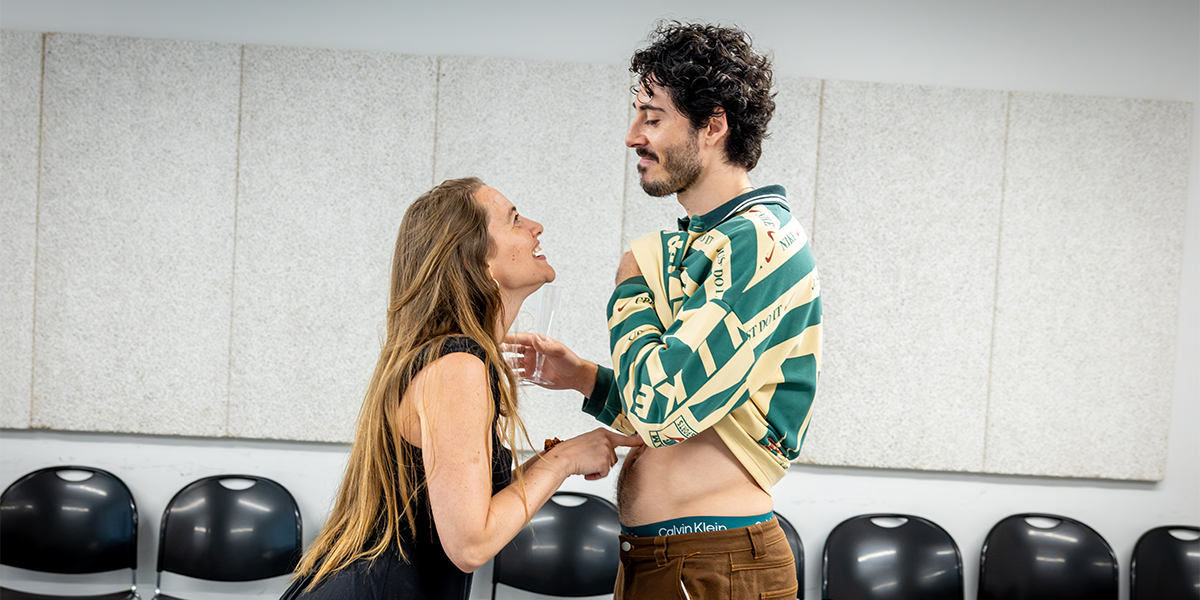
The play centers on Jason (Matisse Ratron-Neal), an ambitious and closeted British football star, and Ade (Bell), his teammate and friend, tracing their complicated relationship across three hotel rooms over a dozen years. The story opens in Eastern Europe with Jason and Ade, both 17, on the eve of their first Champions League match, exploring a reality neither preseason training nor media coaching could prepare them for. Subsequent acts check in on Jason at ages 24 and 29, exploring his encounters with Lyndsey, a table dancer hired as a cover, and Harry, a hotel worker who threatens to expose him, before a final, fraught reunion with Ade.
As the characters age, they grapple with the trappings of success and the brutal machinery of fame. For Jason, the pursuit of greatness requires extreme sacrifices. “There is no middle ground,” Ratron-Neal explained. “There’s no gray area. Either I pursue greatness or I shouldn’t be doing this at all.”
“One of my favorite lines that Jason says is, ‘Talent is bullshit,’” Hunter added. “So much of it is about what you’re willing to swallow, hide, push away, beat down, compartmentalize. That is the fucking grit that is needed to really climb these mountains.”
“The thing this play does so beautifully is let the audience into how even people who are superstars, are humans too,” Bell added. “They have things they struggle with, they have things they love and that they find amazing, that are deeply important and personal to them.”

When Hunter read Donnelly's script, he said, it "leapt off the page [...] for a million reasons.” One of those was that humanizing element: “We get to follow these superstars, but the play itself only lets us in in these really intimate hotel spaces where they’re really free to be themselves.”
The Pass foregrounds the darker intersections of sports, sexuality, and survival in a world Ino Badanjak, who plays Lyndsey, described as “dangerous.” That’s where it differs from properties like Heated Rivalry, which explores similar themes but is primarily a romance.
“Sex is just the umbrella for so many things: power, validation, a currency to move through the world,” Hunter said. “There’s something so lovely and delightful about an erotic fantasy like Heated Rivalry. The Pass is erotic and tense, but it’s chasing different question marks. It’s mining something a bit deeper than simple transactional sex.”

Hunter likened the structure of The Pass and its 12-year arc to Aaron Sorkin’s screenplay for Steve Jobs, which is also anchored by three specific moments spanning more than a decade. “How we move in time is rooted to actions and events, and so it’s less about a single through line and more how the moments in pivotal points of our lives have these sliding doors, turning points.”
During each of Jason’s high-stakes, closed-door encounters, the play’s dialogue crackles with what is left unsaid. “Communication is so much more than just the words that we say,” Bell added. “It’s the rare time in any person’s life, but especially when you are around other people, that you are truly doing nothing, that you are truly living in silence.”
The audience, then, is trusted to fill in the blanks. “It’s unbelievably refreshing to have characters that speak to one another under the guise that the audience is smart enough to understand what’s happening, who these people are to one another, without getting hit over the head with the ideas that are present in the play,” Ratron-Neal noted. Indeed, even non-soccer die-hards can easily grasp the stakes: “You look at the Premier League in England, I couldn’t name a gay footballer who’s playing right now,” said Oliver Rowland-Jones, who plays Harry. “These conversations are still as relevant now around masculinity and power as they were in 2014.”

While The Pass tackles immense socioeconomic pressures in professional athletics, the team was quick to emphasize the show’s entertainment value.
“In a play that deals with such heavy stuff and such unfamiliar but simultaneously extremely relatable struggles these people are going through, there’s such humor,” Ratron-Neal observed. “This play is really funny in both dark ways and ridiculously juvenile ways. It’s really easy to try and give this to people when you also say, ‘By the way, you might cry or wee yourself with laughter at the same time.’”
“This play is constantly wrong-footing audiences and bringing us in,” Hunter concluded. “This would just be tropey, trite, afterschool storytelling bullshit if it weren’t wicked and witty and perverted and deeply silly and deeply stupid. It’s about watching real people who say messed-up stuff and do things they probably wouldn’t if we weren’t in a hotel room.
"There’s a real acerbic bite to this play that keeps it from being a homework assignment or a morality tale, and that’s what excites us all.”
Get The Pass tickets now.
Photo credit: The Off-Broadway cast of The Pass in rehearsal. (Photos by Russ Rowland)
Originally published on
Latest News
- 1
Original stars Nikki M. James, Rory O’Malley to return to ‘The Book of Mormon’ on Broadway
- 2
Bernie Williams to join 'Buena Vista Social Club' on Broadway; José "Candelita" Iglesias extends run
- 3
A timeline of the record-setting musical ‘The Fantasticks’
- 4
Six Degrees of Broadway Stages: Connecting all the Broadway shows in the New York Theatre Sale
- 5
Shop the New York Theatre Sale for Broadway ticket deals and more
- 6
10 Broadway artists who are double-booked this season
- 7
Rosie O'Donnell to play two-week run in 'The Rocky Horror Show' during Rachel Dratch's leave
- 8
‘Two Strangers (Carry a Cake Across New York)’ to close on Broadway in November
- 9
New York Theatre Sale returns with limited-time deals on Broadway tickets
- 10
'The Outsiders' tickets now available through July 2027
Related articles
Subscribe to our newsletter to unlock exclusive New York theatre updates!
- Get early access to Broadway's newest shows
- Access to exclusive deals and promotions
- Stay in the know about top shows and news on Broadway
- Get updates on shows that are important to you
You can unsubscribe at any time. Privacy Policy